


Spoiler warning: This guide discusses Sophia Monad’s full storyline, key late-game events, major choices, and ending-related consequences in Lies of P.
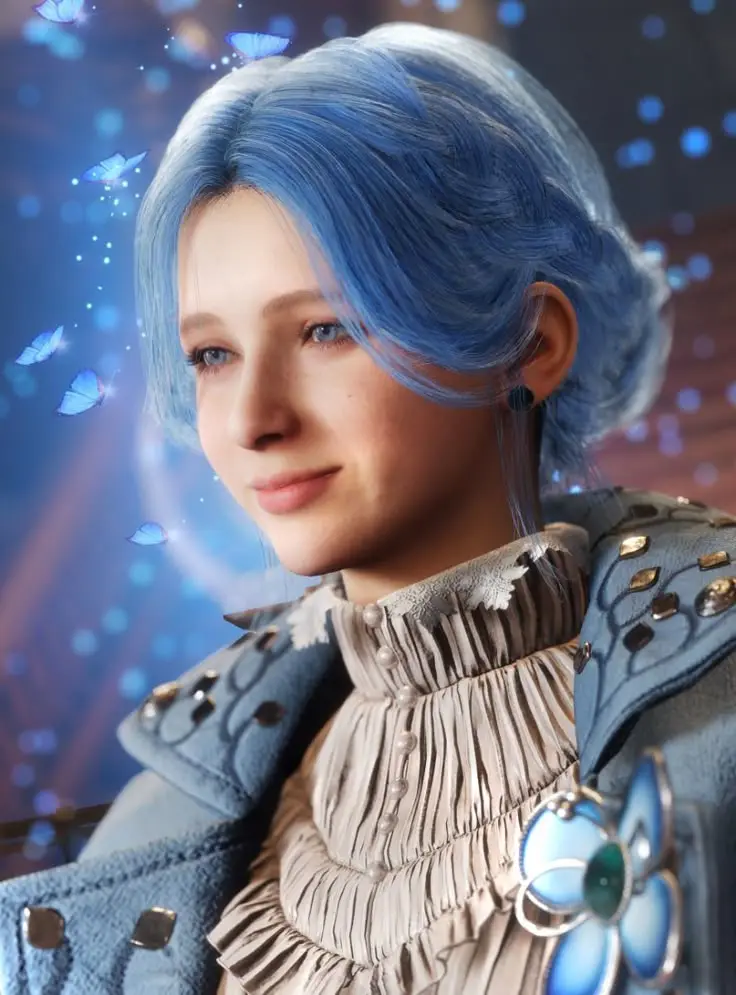
Sophia Monad is one of the most important characters in Lies of P. She is P’s first ally, the voice that leads him through ruined Krat, and a major link between Ergo, the Petrification Disease, the Alchemists, and the game’s central theme of becoming human. Her story is not merely a supporting subplot: Sophia’s fate can influence P’s Humanity, appearance, ending route, and access to the “The Story of the Blue Butterfly” trophy or achievement.
Unlike many NPCs in the game, Sophia exists simultaneously as a narrative guide and a gameplay mechanic. She gives the player a practical way to level up, but her powers also explain why P can repeatedly return from death and continue his journey through Krat.
Quick Profile
| Detail | Information |
|---|---|
| Full name | Sophia Monad |
| Game | Lies of P |
| Role | Guide, ally, source of P’s leveling progression |
| Family | Daughter of Isabelle Monad and Valentinus Monad |
| Special ability | Listener ability, allowing her to sense and communicate through Ergo |
| Main locations | Hotel Krat, Saintess of Mercy Statue, Black Seaside, Arche Abbey |
| Connected characters | P, Geppetto, Simon Manus, Carlo, Romeo, Antonia and the Monad family |
| Major choice | Give Sophia peace or let her remain alive |
| Trophy / achievement | “The Story of the Blue Butterfly” |
| Voice actress | Allegra Marland |
Who Is Sophia Monad?
Sophia Monad is the blue-haired woman who contacts P at the beginning of the game. Before P fully understands Krat’s collapse, the Puppet Frenzy, or the danger surrounding him, Sophia is already guiding him toward safety and giving him a purpose: reach Hotel Krat and search for Geppetto.
For much of the adventure, she appears calm, intelligent, and compassionate. She explains the worsening situation in Krat, offers direction after major boss encounters, and acts as an emotional anchor in a world filled with betrayal, disease, puppets, experiments, and death.
However, Sophia is not simply an observer. She has a deeply personal reason for awakening P. Her connection to him begins as an attempt to find salvation from her own imprisonment, but their relationship gradually becomes more sincere and emotionally significant.
Sophia’s Family and Origins
Sophia belongs to the Monad family, one of the most influential families in Krat. Her father, Valentinus Monad, was associated with the leadership of the Alchemists, while her mother, Isabelle Monad, passed down the unusual power that would shape Sophia’s entire life.
That inherited power is known as the Listener ability. A Listener can perceive Ergo in ways ordinary people cannot, hearing the memories, emotions, and echoes of life contained within it. Because Ergo is a central element of Lies of P’s world, this ability gives Sophia access to knowledge and influence that few others possess.
Sophia’s gift was not treated as a blessing by everyone around her. The ability isolated her and made her vulnerable to exploitation, especially once the Alchemists understood that her connection to Ergo could be used for far more than communication.
What Is a Listener?
To understand Sophia, players need to understand why a Listener matters. Ergo is not merely a magical resource used to level up or upgrade equipment. It is connected to human essence, memory, life, and emotion. Sophia can hear and interact with that force, making her a bridge between people, puppets, and the hidden history of Krat.
Her powers allow her to communicate across distances and influence the flow of time. This is why she can speak to P when she is physically far away, project herself throughout Krat, and help him return to Stargazers after death.
In gameplay terms, this creates a rare harmony between story and systems. The game does not treat resurrection as an unexplained convenience. Instead, Sophia’s extraordinary ability gives narrative meaning to one of the most familiar mechanics in the soulslike genre.
Sophia and the Puppet Frenzy
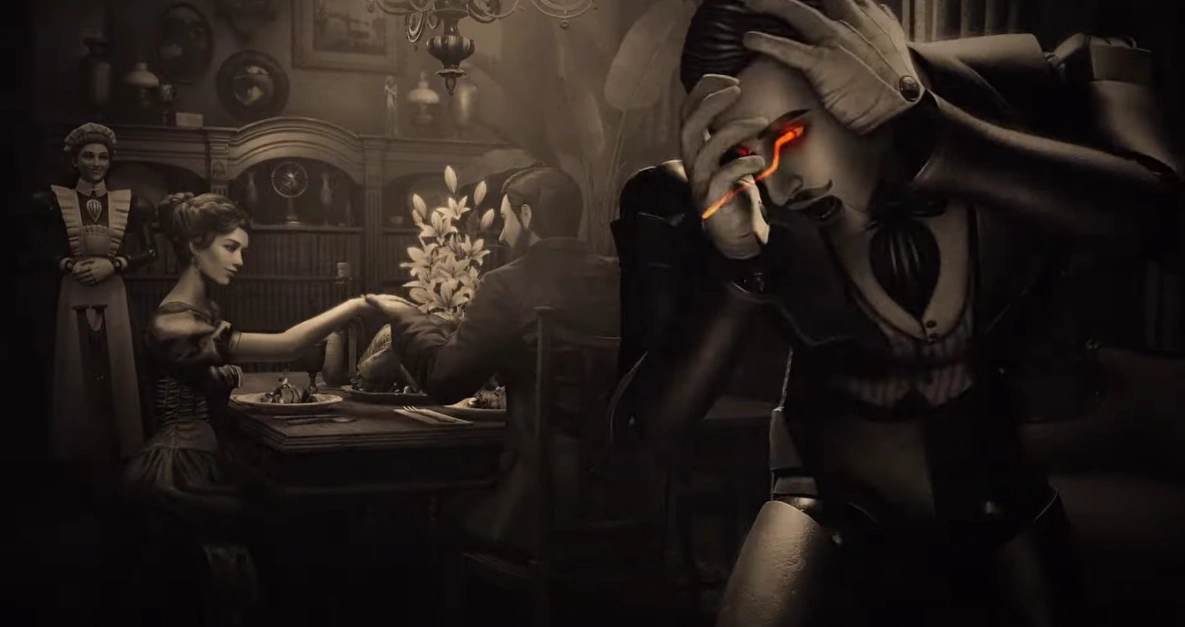
Sophia finds P in a hidden train car at Krat Central Station and awakens him. She then instructs him to collect Gemini, equip a weapon, and make his way to Hotel Krat.
At this point, Krat is already devastated. The Puppet Frenzy has turned puppets into violent threats, the Petrification Disease is spreading through the population, and survivors are struggling to understand who or what caused the city’s destruction. Sophia recognizes that P may be capable of changing the situation.
Initially, P appears to be Krat’s final hope. As the story unfolds, though, players learn that Sophia’s motives are more complicated. She did want to stop Simon Manus and protect Krat, but she also needed someone strong enough to reach Arche Abbey and free her from a fate she could not escape alone.
This revelation does not make Sophia a villain. Instead, it makes her more human. She is frightened, exhausted, and desperate, yet she still helps P throughout his journey and eventually develops a genuine bond with him.
Sophia’s Role at Hotel Krat
After P reaches Hotel Krat, Sophia becomes one of the game’s most important recurring NPCs. She gives players the ability to spend Ergo and improve core attributes such as Vitality, Vigor, Capacity, Motivity, Technique, and Advance.
This means Sophia is directly tied to character progression. Stargazers can provide limited leveling access early in the game, but Sophia becomes the main hub for improving P until later stages of the story.
Her presence at Hotel Krat also reinforces the hotel’s role as a refuge. While the city outside becomes more dangerous, Sophia, Antonia, Venigni, Eugenie, Polendina, and other residents offer P information, services, quests, and emotional context. Sophia is particularly important because she keeps the larger narrative moving forward.
Why Sophia Helps P Return After Death
One of the most interesting details about Sophia is that her powers are closely linked to P’s ability to return after dying. When P falls, Sophia uses her control over time and Ergo to bring him back to a safe point represented by a Stargazer.
This makes death more than a standard video game reset. Each failure becomes part of the story’s lore: P can continue because Sophia repeatedly gives him another chance. The mechanic also reflects the game’s recurring ideas of memory, repetition, fate, and transformation.
Sophia’s power is therefore both helpful and tragic. It allows P to become stronger, but using it comes at a severe personal cost to her. By the time the full truth is revealed, players understand that every act of guidance is connected to her ongoing suffering.
The Truth About Sophia’s Projection
For most of the game, P speaks with a projected version of Sophia rather than her physical body. Her true form remains imprisoned at Arche Abbey, where Simon Manus has used her abilities for his own experiments and ambitions.
Simon sees Sophia’s powers as a tool. He wants to control evolution, overcome human limitations, and reach a godlike state. Sophia’s Listener ability and connection to Ergo make her essential to his plans.
The machine used to exploit her leaves Sophia physically transformed, immobile, and in constant pain. Her soul becomes fragmented, allowing her consciousness to appear in distant places even though her real body is trapped within the Abbey.
This is one of Lies of P’s strongest narrative twists because it changes the meaning of every earlier conversation. The poised, elegant Sophia encountered at Hotel Krat is real in personality and intention, but she is also a projection created by someone who has been suffering in isolation for much of the story.
Sophia at Black Seaside
When P reaches Black Seaside and approaches the Isle of Alchemists, Sophia reveals more of the truth. She admits that she had not been completely honest about why she awakened him.
She explains that her real body is located in Arche Abbey and that P’s journey was, in part, her chance to be rescued. This confession is a turning point in their relationship. Sophia does not demand forgiveness; instead, she openly acknowledges the selfish element of her actions and thanks P for everything he has done.
At this point, Sophia grants P the remainder of her power. From then on, players can level up directly at Stargazers, no longer needing to return to Hotel Krat to spend Ergo.
This gameplay change is also symbolic. Sophia gives P a greater degree of independence just before he enters the final stretch of the game and confronts the reality of her condition.
Sophia’s Final Choice
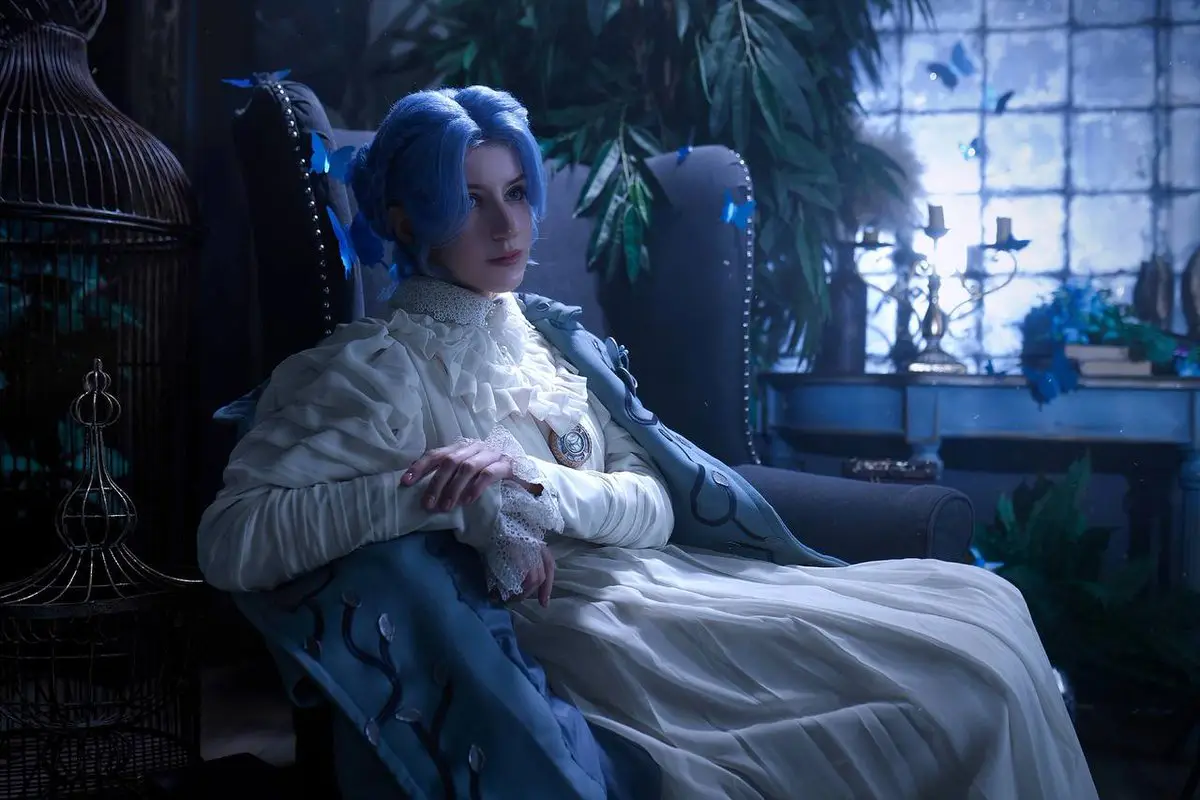
After defeating Laxasia the Complete, P finds Sophia’s true body in Arche Abbey. She is severely mutated and trapped in unbearable pain. Sophia asks P to give her peace and absorb her Ergo so that part of her can remain with him.
The player can make one of two decisions:
- Give her peace: P ends Sophia’s suffering and receives her Ergo.
- Let her live: Sophia remains alive, but her suffering continues until she eventually dies.
This choice is emotionally difficult because the game does not present it as a simple matter of life versus death. Sophia has clearly expressed her wish, and the player must decide whether respecting that wish is an act of compassion or whether preserving her life is the better choice.
Giving Sophia peace is generally viewed as the more merciful path because it honors her request and ends the torture imposed on her by Simon Manus. It also has important consequences for Humanity-related progression and the Rise of P route.
Hair Color and Humanity
If P has accumulated enough Humanity and chooses to give Sophia peace, his hair changes to gray. This visual change is one of the clearest indicators that P is becoming more human.
Humanity in Lies of P is not based only on telling lies. It can also be influenced by dialogue choices, listening to records, completing certain character interactions, and responding to the emotional experiences of people in Krat. Trophy guides commonly identify signs such as the “Your Heart Is Pounding” message as an indicator of high Humanity.
Sophia’s choice is especially meaningful because it links Humanity to empathy. P becomes more human not simply by manipulating facts, but by making emotionally complex decisions and responding to another being’s suffering.
Sophia and the Rise of P Ending
Sophia is strongly associated with the Rise of P ending. To pursue this route, players generally need high Humanity, must give Sophia peace, refuse Geppetto’s request for P’s heart, and defeat the Nameless Puppet.
In this ending, P uses Sophia’s Ergo to bring her back in a new puppet body. Sophia survives in a different form, continuing one of the game’s central questions: if memories, identity, emotion, and will remain intact, can a puppet be considered human?
The ending also gives Sophia a more hopeful future. Rather than remaining a victim of the Alchemists and Simon Manus, she is given the chance to exist beyond the body that imprisoned her.
How to Get “The Story of the Blue Butterfly”
“The Story of the Blue Butterfly” is an achievement or trophy connected to Sophia’s final storyline. Its official description is simple: players must discover the last story of Sophia.
To unlock it, follow these steps:
- Build high Humanity during the playthrough through choices, records, gestures, and relevant character interactions.
- Defeat Laxasia the Complete and choose “Give her Peace” when speaking to Sophia.
- Defeat Simon Manus.
- Refuse Geppetto’s demand for P’s heart.
- Defeat the Nameless Puppet.
- After the credits, do not begin New Game Plus immediately. Return to Hotel Krat instead.
- Go to Geppetto’s desk and read The Blue Butterfly’s Letter to receive the trophy or achievement.
This trophy is easy to miss because starting New Game Plus too quickly can prevent players from returning to Hotel Krat to collect Sophia’s letter during that playthrough.
Sophia and the Blue Fairy
Sophia is inspired by the Blue Fairy from Carlo Collodi’s The Adventures of Pinocchio. The connection is visible through her blue hair, her role as P’s guide, and her involvement in his transformation from a puppet toward humanity.
However, Sophia is not a direct copy of the original literary figure. Lies of P turns the fairy archetype into a tragic character with her own agency, trauma, family history, and relationship to the world’s science-like mysticism of Ergo.
The game’s version is darker and more emotionally complicated. Sophia guides P, but she also needs him. She is powerful enough to alter time, yet vulnerable enough to be imprisoned and exploited. That contrast makes her one of the most memorable characters in the game.
The Meaning of Butterflies
Butterflies are closely connected to Sophia’s imagery and storyline. In many cultural traditions, butterflies symbolize the soul, transformation, death, rebirth, and the movement from one state of existence to another.
That symbolism fits Sophia perfectly. Her body is destroyed by exploitation, but her identity survives through Ergo. Her story moves from imprisonment to release, from physical suffering to spiritual continuation, and potentially from death to rebirth through P’s actions.
The title “The Story of the Blue Butterfly” therefore works on several levels. It references Sophia’s blue-haired des, her connection to the Blue Fairy, her fragmented soul, and the possibility that life can continue in a different form.
Sophia and Carlo
Sophia’s past is also tied to Carlo, the human boy whose memories and identity are central to P’s existence. At the Monad Charity House, Sophia knew Carlo and introduced him to Romeo, creating an important connection between several of the game’s most significant characters.
This detail adds weight to Sophia’s relationship with P. She is not speaking to a random puppet; she recognizes the echoes of someone from her past. At the same time, P is not simply Carlo returned unchanged. He is his own evolving being, shaped by Ergo, choices, experiences, and the player’s actions.
Sophia’s perspective helps players understand the difference. She recognizes the past, but she also sees P’s ability to become something new. That makes her one of the few characters who can appreciate both the tragedy of Carlo and the individuality of P.
Interesting Facts About Sophia
- Sophia’s surname, Monad, refers to a concept associated with unity and spiritual or metaphysical philosophy, fitting the game’s focus on soul, identity, and transformation.
- Her first major gameplay function is allowing P to level up with Ergo, making her essential to character progression for much of the game.
- Sophia’s real body and projected form create a deliberate contrast between the graceful figure P sees and the suffering hidden behind that image.
- Her decision scene after Laxasia the Complete is one of the most important choices for players attempting the Rise of P ending and the Sophia-related trophy.
- Sophia is voiced by actor Allegra Marland.
- Her story demonstrates that Lies of P does not treat puppets as inherently less human than people; personality, memory, empathy, and choice matter more than the material of the body.
Why Sophia Matters
Sophia Monad matters because she brings together nearly every major theme in Lies of P: the power of Ergo, the cost of ambition, the nature of memory, the meaning of humanity, and the possibility of rebirth. She is both a victim of Krat’s darkest forces and one of the people most responsible for P’s chance to overcome them.
Her storyline also improves the game’s emotional stakes. The final choice is not simply about obtaining a preferred ending or maximizing Humanity. It asks players to consider dignity, consent, sacrifice, and whether compassion sometimes means letting go.
For players exploring the lore in detail, Sophia is not only P’s guide. She is the emotional heart of the journey and one of the clearest examples of how Lies of P transforms the classic Pinocchio tale into a darker story about identity and freedom.